


The Whole List of All Three MICHELIN Key Hotels in 2026
Release date: 2026-10-07Release Date: 2026-08-18 13:36:39
You've just checked into a hotel, dropped your bag, and sat on the edge of the bed. The mattress feels supportive, but the immediate difference comes from the bedding. The sheet is cool rather than clammy, the duvet has loft without feeling heavy, and the pillows settle into place instead of collapsing under your head.
That sensation isn't created by a logo or a high thread-count number alone. Luxury hotel beddings are specified as a coordinated system, combining fiber length, yarn construction, weave, fabric weight, finishing, fill power, and carefully ordered layers. The strongest programs also account for hot commercial laundering, allergy policies, climate, and the guest's expectations at the point of contact.
A guest feels the bed as a single surface. A hotel buyer specifies separate components: the sheet against the skin, the duvet regulating warmth, the pillow supporting the head, and the protector and topper affecting pressure relief and mattress life. Fit, folding, and layer order complete the visual impression.
The measurable difference starts with construction. Extra-long-staple cotton supports smoother, stronger yarns because longer fibers leave fewer exposed ends. Under repeated commercial laundering, that can help limit roughness, pilling, and loss of surface clarity. Weave changes the hand feel as well. Percale's plain construction supports airflow and a crisp finish, while sateen uses a different yarn arrangement to create a smoother, warmer surface.
A showroom touch test is only a starting point. Specify the fabric against the property's wash temperature, drying method, folding process, storage conditions, and replacement cycle.
Duvets introduce a separate performance variable. Fill power measures the loft produced by a given quantity of down. Greater loft can provide insulation with less bulk, so premium hotel-grade goose-down programs are often specified around 700 to 800+ fill power, according to technical guidance on luxury hotel bedding layers.
The branded sleep experience also shaped guest expectations. Westin introduced its Heavenly Bed in August 1999, and by 2006, more than 19 million guests had slept in one, helping establish branded bedding as an industry benchmark, according to this luxury hotel bedding market retrospective. Buyers should read that history carefully: a recognizable label does not replace specifications. Guests may never name the fiber, GSM, ply, or fill power, yet they register the combined result through temperature, surface friction, loft, support, and how quickly the bed recovers after use.
Start with the raw material, then move outward to the way the material is built and finished. This sequence prevents a common purchasing error, choosing a fabric based on a marketing label before checking its construction.
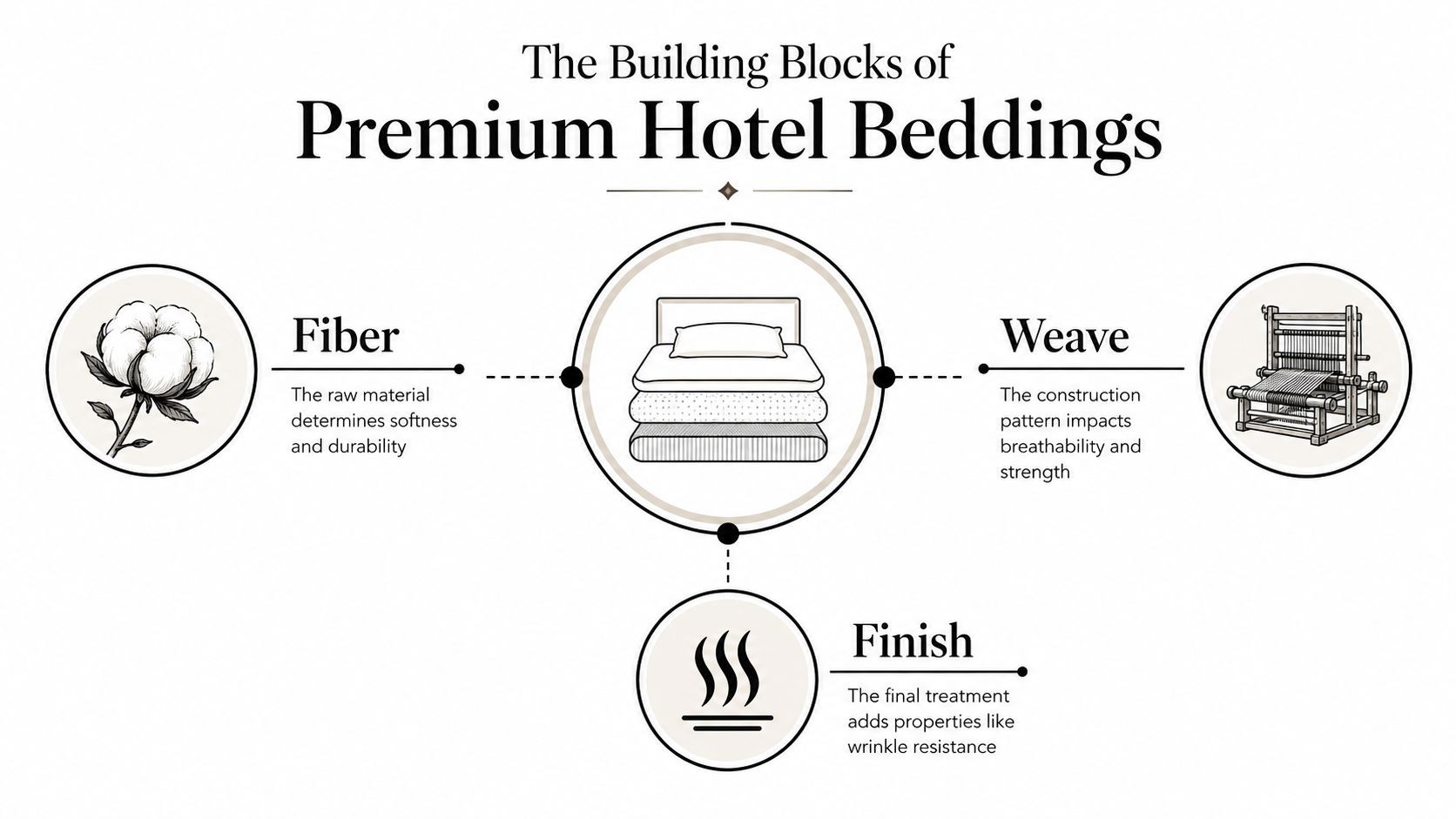
Fiber length influences the quality of the yarn. Extra-long-staple cotton is commonly favored in upscale hospitality because the longer fibers support tensile strength and resistance to pilling. A smooth yarn also creates a cleaner surface, which helps the sheet feel refined without depending on an excessive thread-count claim.
Fiber origin still matters, but the label alone doesn't settle the purchase. Cotton, bamboo-derived textiles, and regenerated cellulose options can all produce different hand feels and care profiles. The buyer should request the actual fiber composition, yarn construction, finishing details, and care requirements rather than accepting “natural” or “premium” as complete specifications.
Percale uses a plain weave and is associated with breathability and a crisp hand feel. Sateen generally feels smoother and can provide a warmer surface. Neither is automatically superior. A warm climate, a guestroom with strong climate control, and a property's laundering capacity may point to different choices.
Ply describes how many yarns are twisted together before weaving. In hospitality, single-ply construction is commonly paired with extra-long-staple cotton because it can deliver a clean, lightweight fabric without creating unnecessary bulk. A high ply count can sound impressive in retail marketing, but it doesn't automatically indicate better durability or comfort.
Finishing treatments can alter softness, wrinkle behavior, color, and the first impression at bed turn-down. The trade-off is that a finish can't rescue a weak fiber or poorly constructed yarn. Buyers should test the fabric after laundering, not just approve a pre-wash sample.
A useful sample review includes the laundered hand feel, seam stability, shrinkage behavior, pilling, whiteness, and ease of pressing. That practical review tells you far more than a product title.
A hotel sheet has to survive repeated commercial laundering while maintaining the hand feel guests associate with a premium room. A commonly specified build is single-ply, extra-long-staple cotton percale, with hospitality thread counts around T-250 to T-400 and fabric weights around 100 to 120 GSM, as outlined in this hotel sheet specification guide.
| Specification | Typical Range | Why It Matters |
|---|---|---|
| Construction | Single-ply | Keeps the fabric refined and avoids unnecessary bulk |
| Thread count | T-250 to T-400 | Provides a practical hospitality range when paired with sound yarn quality |
| Fabric weight | 100 to 120 GSM | Balances hand feel, breathability, and laundering endurance |
| Fiber | Extra-long-staple cotton | Supports tensile strength and pilling resistance |
| Weave | Percale | Preserves airflow and a crisp surface |
Thread count measures yarn density, but the figure has limited value without construction details. Retail claims of 600, 800, or 1000 may rely on very fine yarns or multi-ply counting methods. The result can sound luxurious while producing a heavier, warmer, or less breathable sheet.
Specify how the count was measured and confirm whether the fabric is single-ply. Then judge the sheet against the property's operating conditions: surface retention, tensile strength, comfort, and performance after laundering. A high number cannot compensate for weak yarn quality or unsuitable construction.
GSM, or grams per square meter, indicates how much material the fabric contains. At 100 to 120 GSM, a sheet can feel substantial without becoming unnecessarily dense. A lighter fabric may feel flimsy and wear sooner. A heavier one can restrict airflow, extend drying demands, and create a warmer sleep environment.
The commercial hotel sheet resource from East West Hotel Textile helps buyers compare thread-count terminology with hospitality purchasing considerations. Use the stated specifications to narrow the options, then run a laundering trial. Inspect the hand feel, shrinkage, pressing behavior, pilling, seam stability, and surface appearance after repeated processing. That test shows whether the specification works in the property's actual operation.
Sheets control surface comfort, while the insert controls thermal balance. A duvet that lies flat feels underfilled. One that is overly dense can overheat guests, increase weight, and slow room attendants during bed making. Specify the warmth level, finished weight, and construction together rather than buying on loft alone.
Fill power is the central benchmark for down. Premium goose-down systems are often specified at around 700 to 800+ fill power. Higher loft can provide more insulation for less weight, provided the shell, fill distribution, and baffle construction support it. A high figure does not compensate for poor fill cleanliness, migration, or inconsistent chamber loading.
Goose down generally occupies the premium end of a natural-fill program because it can deliver high loft with a light hand. Duck down can provide a cost-conscious natural option, but buyers should verify its fill specification, cleanliness, and consistency. Feather adds structure and weight, which can suit supportive pillows, although it usually feels less cloud-like than a down-heavy design.
Natural fill also increases the importance of construction and care. Baffling or quilting limits migration, while a tightly woven shell helps contain the filling. Laundry procedures must match the insert's care requirements. Without those controls, loft becomes uneven and guests may encounter cold spots or a lumpy pillow.
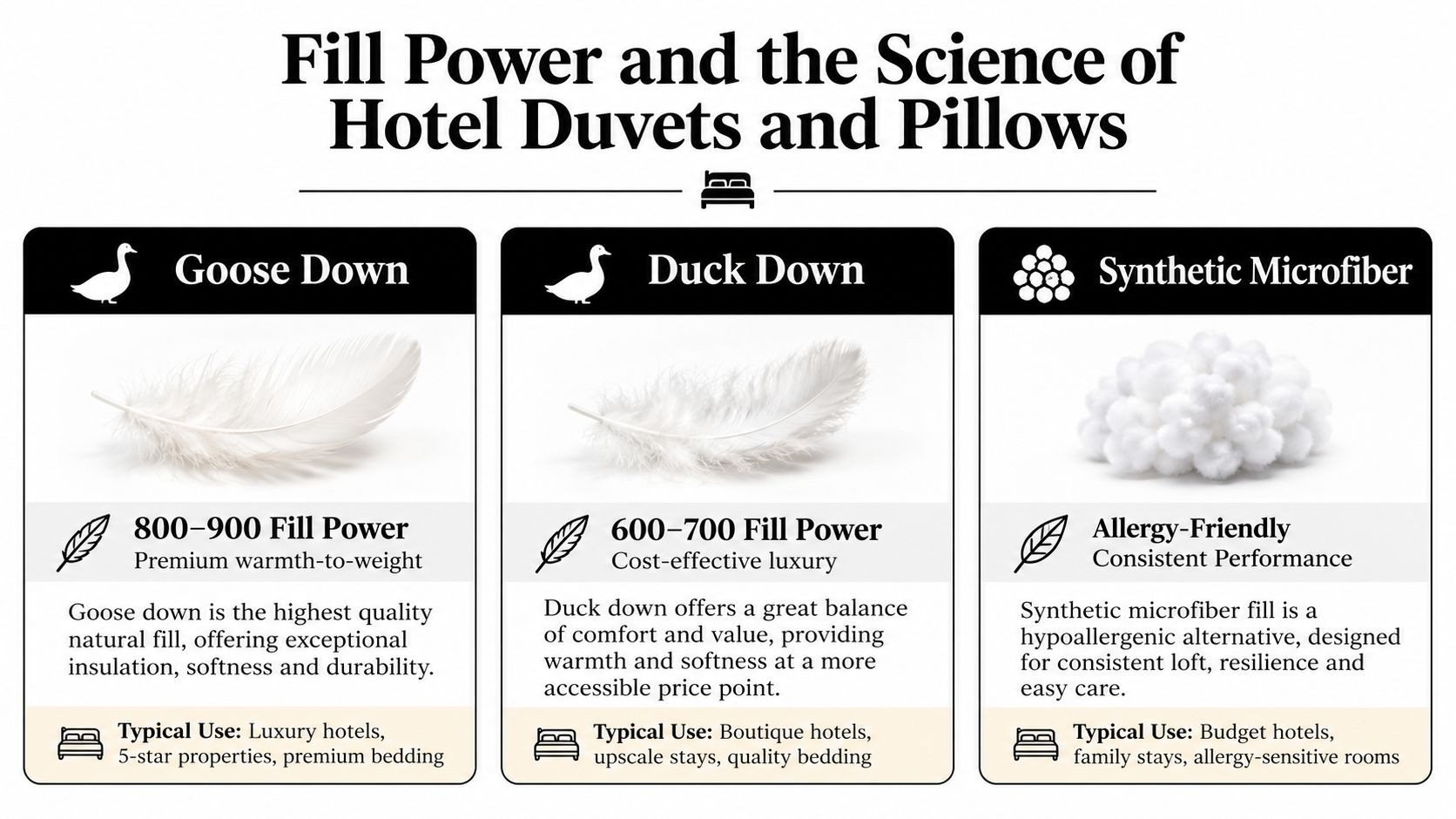
Microfiber and hollowfiber fills offer consistent sizing, repeatable weight, and simpler alignment with allergy-sensitive operating policies. They can also make replacement easier because each insert can be produced to a defined loft and specification. The trade-off is tactile and thermal: a synthetic insert may not reproduce the same light, resilient loft as premium down, even when its nominal weight is similar.
A pillow menu can make either filling system more useful. Different firmnesses or fill types can address side sleepers, back sleepers, warmer rooms, and guests who prefer down alternatives. Keep the program operationally simple, with clear housekeeping storage, labeling, and replenishment rules.
For a direct comparison, review the hotel down duvet range alongside shell fabric, fill composition, care instructions, finished weight, and replacement policy. Fill power alone is not enough.
The finished bed works because each layer has a job. Remove one without understanding its function, and the guest may feel the loss even if the visual presentation remains attractive.
Begin with a mattress protector. It protects the mattress from moisture, stains, and routine room turnover while providing a controlled surface beneath the topper. The protector shouldn't create noise, trap heat, or wrinkle beneath the fitted sheet. A waterproof barrier that feels plasticky is a frequent failure because guests experience it directly.
The topper follows when the property wants additional cushioning or pressure-point relief. It can change the perceived firmness of the mattress and help preserve the mattress surface, but it needs secure corner attachment and a cover that survives the laundry program.
Mattress and protector: Create the stable, hygienic foundation. Check that the protector fits the mattress depth without pulling at the corners.
Topper: Add cushioning where the mattress specification needs help. Don't use it to disguise an unsuitable mattress.
Fitted bottom sheet: Select elastic and pocket depth for reliable tension. A sheet that pops off overnight undermines every premium detail above it.
Flat sheet: Use it as the main skin-contact layer and part of the triple-sheeting envelope. It should remain smooth without becoming restrictive.
Blanket, quilt, or coverlet: Add flexible warmth and visual structure. A coverlet folded at the foot can create a polished appearance without forcing every guest to sleep under it.
Duvet and cover: The insert supplies loft, while the cover protects it and gives housekeeping a replaceable exterior layer.
Pillows and shams: Combine sleeping support with the architectural look guests associate with an upscale room. Decorative pieces should never crowd out the pillows needed for actual comfort.
A bed runner can anchor the presentation and provide a practical surface for luggage or folded clothing, but it shouldn't replace a washable protective layer. The best styling decisions support housekeeping rather than creating extra pieces that are difficult to clean, store, or track.
A bedding program may meet a sustainability brief during procurement yet create avoidable environmental pressure in daily operation. Fiber selection is only one variable. Wash chemistry, water temperature, drying method, replacement cycles, and synthetic material entering wastewater all affect the result.
Commercial laundering of hospitality textiles can emit around 1.3 kg of CO2e per conventional wash, according to reporting on the environmental impact of hospitality bedding. Synthetic fabrics may also shed microfibers during washing. A 2024 study reported wastewater microfibre levels ranging from 500 to 367,000 microfibers per liter. That range makes fiber shedding a specification and filtration issue, not just a marketing concern.
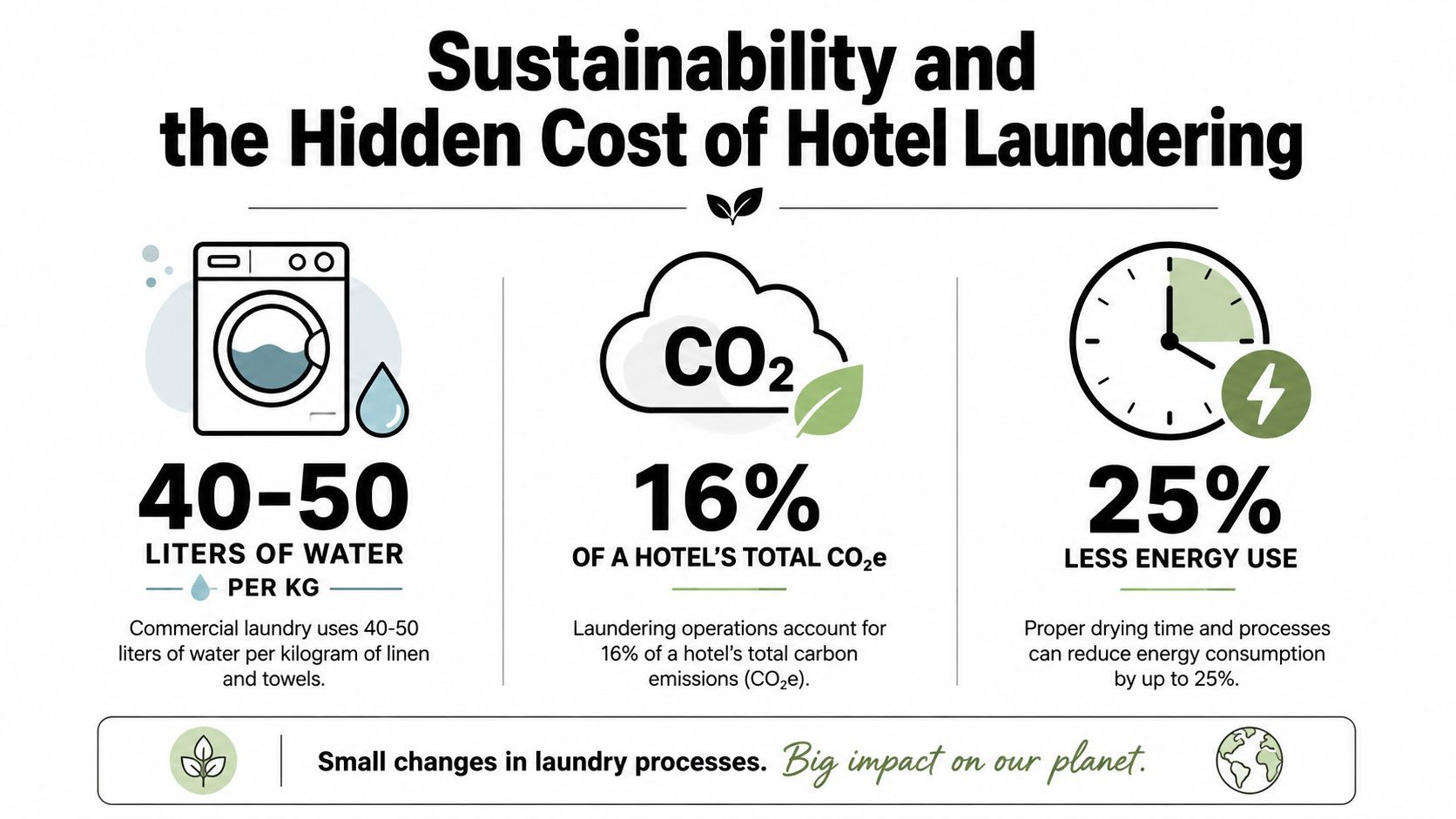
Synthetic microfiber inserts can support allergy policies and deliver consistent performance, but their shedding profile belongs in the product specification. Natural fibers reduce reliance on synthetic surfaces, while cotton still carries substantial agricultural and processing demands. A fabric that wears out early can increase replacement volume and erase part of its environmental advantage.
Hospitality options include organic cotton, bamboo-derived textiles, Tencel, and hypoallergenic or antimicrobial bedding. These labels do not settle the decision. Review the manufacturing process behind bamboo-derived fabric, and assess antimicrobial treatments for chemistry, guest sensitivity, and end-of-life handling.
Guest priorities keep procurement practical: comfort, cleanliness, softness, warmth, and moisture absorption. Price sensitivity can slow adoption of signature-bed products. Test the complete item under the hotel's laundering conditions, then record its laundered hand, drying behavior, dimensional stability, and defensible environmental claims.
For laundry teams, the commercial laundry guide for keeping hotel linens white and bright can support process discussions. Sustainability is an operating decision covering product specification, wash settings, equipment, replacement planning, and waste handling.
Specification drift starts when the approved sample, purchase order, and delivered production no longer match. The solution is a controlled approval process, not a longer product description.
Record the fiber composition, ply, weave, thread-count method, GSM, dimensions, seam construction, color standard, finishing treatment, fill composition, fill power where relevant, and care instructions. Keep a retained sample from the approved production lot. If the supplier changes the mill, yarn, finish, or fill source, require a new review.
A supplier should also explain how it manages quality across repeat orders. Ask for test documentation that matches the property's priorities, then conduct a laundering trial under the same conditions used by the hotel. A sample that looks excellent before washing tells you only part of the story.
A supplier with bed linen, duvet and pillow fills, protectors, toppers, runners, bath linen, slippers, toiletries, and related operating supplies can reduce coordination across categories. That doesn't mean one vendor should win automatically. Consolidation only helps when quality, communication, lead times, and documentation remain dependable.
East West Hotel Textile is one example of a hospitality supplier offering hotel sheets, duvet covers, fitted sheets, pillowcases, down and down-alternative fills, mattress products, bath linen, amenities, and procurement materials. Its catalog also provides options for properties ranging from economy accommodation to luxury hotels, which can help teams compare tier-specific requirements within one purchasing conversation.
Guests don't sleep on thread count. They sleep on a fiber, yarn, weave, finish, fill system, and layer stack working together.
The most useful hierarchy is:
Fiber length: Supports smoothness, strength, and pilling resistance.
Ply and yarn quality: Clarify whether the fabric's construction is refined.
Weave: Percale favors airflow and crispness, while sateen offers a smoother, warmer hand.
GSM: Indicates whether the sheet balances substance with breathability and laundering practicality.
Fill power and distribution: Determine duvet loft and warmth-to-weight performance.
Laundering resilience: Shows whether the product can preserve its guest-facing qualities in operation.
A large retail thread-count claim can't compensate for poor yarn quality, an unsuitable weave, or a fill system that collapses after care. Specify the bed around the property's climate, laundry capability, allergy policy, and brand promise, then test the complete stack in a real room.
East West Hotel Textile offers hotel sheet sets, duvet covers, fitted and flat sheets, pillowcases, mattress protectors, toppers, bed runners, and down or microfiber-filled duvets and pillows. Visit East West Hotel Textile to compare hospitality textile categories and begin a specification-led sourcing conversation for your property.
Read More

The Whole List of All Three MICHELIN Key Hotels in 2026
Release date: 2026-10-07
EastWest Inside: Hotel Linen Manufacturing Process
Release date: 2026-09-21
Top Rated Pet-Friendly Hotels Around the World
Release date: 2026-09-08