


The Whole List of All Three MICHELIN Key Hotels in 2026
Release date: 2026-10-07Release Date: 2026-08-24 17:19:19
You're probably staring at a linen spec sheet, a guest comfort complaint, and a sustainability target all at once. That's exactly where bamboo bedding stops being a lifestyle trend and starts looking like a procurement decision that can affect reviews, operating efficiency, and brand positioning. The question isn't whether bamboo sounds appealing, it's whether it solves the sleep, laundry, and sustainability problems your property is experiencing.
Guest expectations have changed. A room now has to feel calm, look premium, support sustainability messaging, and hold up to constant turnover without creating extra work for housekeeping. Benefits of bamboo bedding sit right at that intersection, which is why it keeps showing up in conversations about modern hotel textiles.

The appeal is straightforward. Bamboo-derived linens are associated with a softer hand feel, strong moisture handling, and a clean sustainability story, which helps a property speak to both comfort-driven guests and ESG-minded owners. For buyers comparing linen options, the strongest argument isn't novelty, it's fit. Bamboo can make sense where hot sleepers, humid climates, and brand-level eco messaging all matter at the same time.
A practical way to think about it is this. Cotton may still be the default in many rooms, but default isn't always optimal. When a hotel needs a fabric that supports a more premium sleep experience without losing sight of resource use, bamboo becomes a serious candidate rather than a decorative upgrade. This overview of eco-friendly hotel linens fits neatly into that broader sourcing conversation.
Practical rule: If the room is designed for comfort but the climate pushes heat and humidity, linen performance matters as much as thread count.
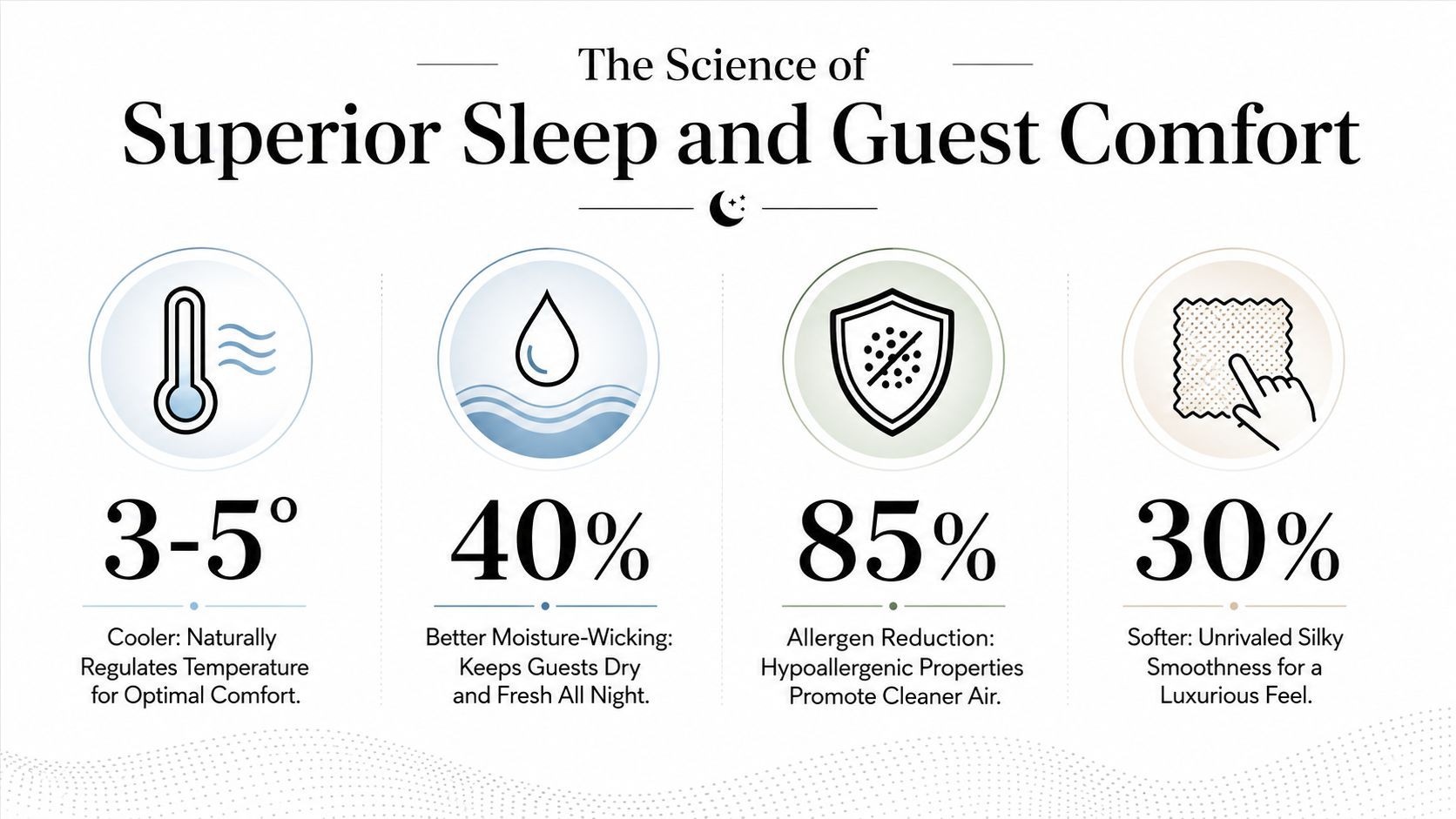
In a guest room, bamboo bedding earns its place by controlling the sleep surface, not by marketing language. Bamboo fabric is described as having elliptical micro-gaps and longitudinal channels that support capillary action, so moisture moves away from the body and disperses more efficiently. Textile-engineering testing reports that bamboo fabric reduced relative humidity at the sleeping surface by 35%, absorbed moisture 1.8× faster than cotton, and evaporated moisture 30% faster than cotton.
That matters because sleep complaints in hotels usually start with heat and dampness, not with a lack of softness. If a sheet holds moisture near the skin, the bed feels sticky and the room feels warmer than it should. Bamboo's moisture transport helps create a drier microclimate, which is what hot sleepers and guests in humid destinations notice first. The same textile source reports 180–220 mm/s air permeability, about 27% higher than cotton and 58% higher than polyester, which helps explain why the fabric feels less stuffy in use.
A hotel room needs linens that support rest through the whole night, especially where air conditioning has to work against heat and humidity. Bamboo bedding behaves more like a performance textile than a decorative layer, because it moves sweat away from the skin faster than basic bedding and dries faster after laundering. That gives housekeeping a fabric that returns to service in better condition and gives guests a bed that feels cooler at first contact.
The same source reports a 2.5°C–3.2°C lower surface temperature than polyester covers under humid conditions. That does not mean every guest will describe the bed the same way, but it does support a practical goal, fewer complaints about overheating and a steadier sleep surface in warm climates.
Some procurement teams also look at weave and construction alongside fiber choice. thread count guidance for commercial hotel sheets is useful context, but thread count alone does not solve heat retention. Fiber behavior and weave structure matter more when the target is cooler, drier sleep.
There is also a sustainability question behind the comfort story, and hotel operators should ask it directly. Bamboo bedding is often sold as an eco-friendly textile, but the key issue is the manufacturing route, especially bamboo viscose versus raw fiber claims, and whether the finished fabric can stand up to commercial laundering cycles without breaking down early. That trade-off matters as much as guest feel, because a softer sheet that fails in the wash creates more cost and more waste than it saves.
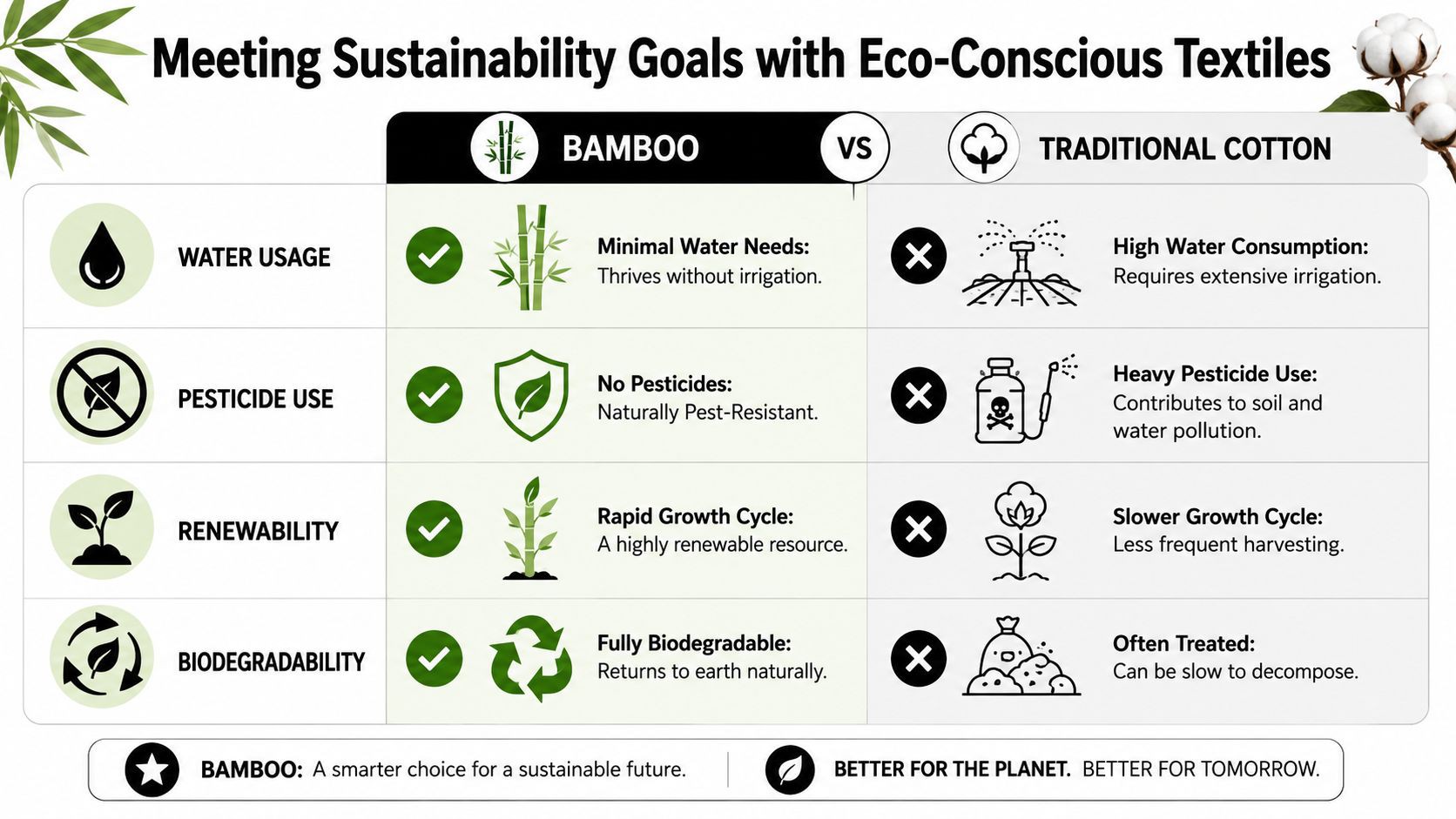
Bamboo has become attractive to hotels for the same reason it appeals to eco-resorts, it gives procurement teams a sustainability story that's easy to explain without sounding vague. One environmental source says bamboo can thrive on about one-third of the water cotton needs, and the same reporting says bamboo can absorb up to 5 times more carbon dioxide and release around 30% more oxygen than most hardwood trees . Those are the kinds of claims stakeholders remember because they connect directly to resource use and climate narrative.
For hotel marketing teams, the value is not just ecological. It's communicable. Guests increasingly notice whether a property can point to tangible sustainability choices, and bamboo bedding gives you a visible, room-level example instead of an abstract corporate pledge. That makes it useful in eco-resorts, lifestyle hotels, and chains trying to align guest experience with CSR language.
The environmental comparison is also useful in procurement conversations because it reframes the choice away from “luxury versus sustainability.” Bamboo can help bridge that gap. A linen program can still feel upscale while using a raw material that carries a lower-water narrative than conventional cotton. That combination is one reason bamboo is frequently specified in properties that want a greener room standard without making the guest feel they've been downgraded.
Bamboo works best as a sustainability-facing upgrade when the property can explain what it is and why it was chosen, not just put the word on a label.
A practical sourcing note belongs here. Guidance on environmentally friendly linens for eco-resorts is useful when you're building a purchasing checklist around room standards, laundry expectations, and brand claims.
The strongest use case is a property that already talks about resource stewardship and wants the bedding to match that message. Bamboo doesn't erase the need to verify fabrication methods, but it does give buyers a raw material with a clear environmental narrative. For owners and procurement leads, that can make the linen budget work harder as part of the hotel's overall positioning.
A procurement team usually asks a simple question first, what does “bamboo” mean on the spec sheet? Many bamboo sheets are rayon or viscose made from bamboo, which means the fiber has been chemically processed into a regenerated textile rather than supplied as a raw woven bamboo material. That processing step matters because the environmental profile depends far more on the conversion method than on the plant name alone.
The label by itself is not enough. Buyers should ask whether the fiber is certified and what manufacturing method supports the sustainability claim, because bamboo products can vary widely in processing impact. A sheet can be marketed as bamboo and still sit anywhere from carefully documented to hard to verify, so procurement should match the claim to the paperwork, not treat the name as proof of eco performance.
Durability under hospitality use is the harder question. Consumer descriptions focus on softness and drape, but hotel operators need to know how the fabric behaves after repeated hot washing and commercial drying. That is where the operating cost shows up, through replacement frequency, labor pressure, and room standards that drift if linen performance becomes inconsistent.
A sheet that feels excellent on night one but breaks down quickly is not a saving, it becomes a hidden operating cost.
High-quality bamboo viscose bedding is often described as soft and easy to care for, but procurement teams still need evidence from their own laundry environment. Institutional laundering can expose weaknesses in pilling resistance, shrinkage behavior, and seam performance that casual consumer guidance does not address. If a supplier cannot explain wash routines and commercial handling in plain terms, that is a warning sign.
Fiber identification: Is it bamboo viscose, bamboo rayon, or another construction?
Certification proof: Can the supplier document the claims behind the fabric?
Laundry compatibility: How does the product handle hot wash and commercial drying?
Finish consistency: Does the hand feel stay stable after repeated use?
East West Hotel Textile offers bamboo-derived bedding among its hospitality textile categories, so it is one supplier option to compare against others when you are checking fabric content and operational fit. The right answer for your property depends on whether you prioritize softness, laundry tolerance, or a sustainability statement, and the strongest programs are the ones where those three points line up.
Start with the fiber name, because that's where confusion usually begins. If the sample is marketed as bamboo, ask whether it's viscose, rayon, or another bamboo-derived construction, then request the care data and certification trail behind it. The fabric can feel excellent, but procurement only works when the spec is clear enough for housekeeping and purchasing to follow consistently.
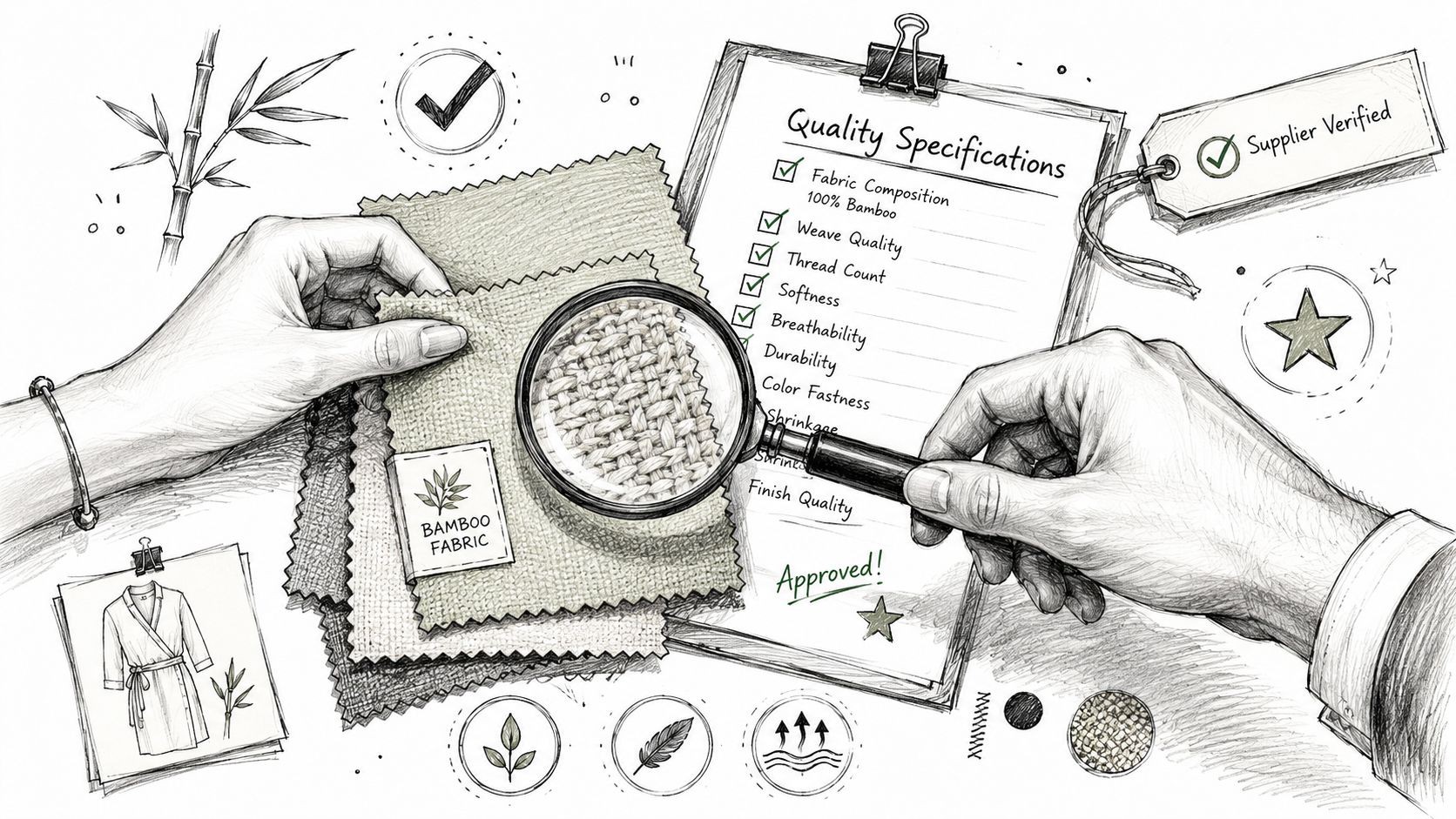
Weave matters because it changes both feel and durability. Sateen usually gives a smoother, silkier hand, while other constructions can feel a bit more structured. For hotel use, that means you're balancing guest perception against the laundering profile you need across thousands of room turns, so a fabric sample should be evaluated under the lighting and handling your staff uses.
You should also ask for a written care recommendation that matches commercial practice. A linen supplier that only talks about home laundering isn't giving you enough to work with. If the product is going into a property with heavy rotation, you need practical guidance, not just a consumer-friendly description.
Fiber content: Confirm the exact bamboo-derived composition.
Certification documentation: Ask for proof supporting any sustainability or safety claims.
Weave sample: Compare the hand feel and drape against your current room standard.
Laundry instructions: Make sure the guidance fits your washers, dryers, and turnover pace.
Replacement planning: Evaluate how the fabric will fit into your normal refresh cycle.
The point is not to chase the softest sample in the room. The point is to source a textile that supports your brand promise, survives your laundry process, and doesn't create surprises after the first install. If you want a procurement benchmark, the right sample set should make it easy to compare bamboo against your current cotton program without guessing.
The benefits of bamboo bedding matter in hospitality because they address several practical needs at the same time. They support guest comfort through moisture control and a cooler sleep surface, they give sustainability-minded brands a cleaner story than conventional cotton when the supply chain is handled correctly, and they can fit a hotel's operational goals if the fabric is specified with care. That combination is why bamboo continues to attract attention from procurement teams.
The caution matters just as much as the appeal. Bamboo is not automatically sustainable merely because the plant grows quickly, and it is not automatically durable just because the label says bamboo. The conversion method, certification trail, and laundry performance all need review, especially in commercial settings where linen choices affect guest feedback and replacement timing.
For properties in humid climates, the operational case is even clearer. Bamboo-derived viscose has been reported to absorb 50% more moisture than cotton and dry 30% faster than cotton, which can improve guest comfort while also reducing laundering time. That is the kind of performance claim hotel buyers can assess against their own room conditions and laundry workflow.
Procurement teams should also separate the plant from the product. The raw bamboo plant and the finished bedding are not the same thing, and the sustainability story depends on how the fiber was processed, finished, and documented. The commercial question is straightforward. Can the textile hold up to repeated laundering, stay comfortable for the guest, and fit into the property's refresh cycle without creating extra strain on operations?
When sourced well, bamboo bedding is not a decorative upgrade. It is a room-level decision that can support reviews, loyalty, and a more credible brand identity.
If you are comparing bamboo bedding options for a hotel, resort, or boutique property, East West Hotel Textile can help you review hospitality-grade linens, bamboo-derived bedding, and coordinated supply categories in one place. Visit East West Hotel Textile to request product information and compare materials against your current room standard.
Read More

The Whole List of All Three MICHELIN Key Hotels in 2026
Release date: 2026-10-07
EastWest Inside: Hotel Linen Manufacturing Process
Release date: 2026-09-21
Top Rated Pet-Friendly Hotels Around the World
Release date: 2026-09-08