


The Whole List of All Three MICHELIN Key Hotels in 2026
Release date: 2026-10-07Release Date: 2026-08-26 17:45:14
Most advice about a 700 fill power goose down comforter starts with the wrong question. Buyers ask, “What's the highest number I can get?” Hotel teams should ask, “What gives the right guest feel, the right drape, and the least spec risk across multiple room types?” 700 fill power is not the trophy score. It's the point where a comforter can feel light, plush, and credible in a guest room without forcing you into the cost and overkill that come with chasing the top of the range.
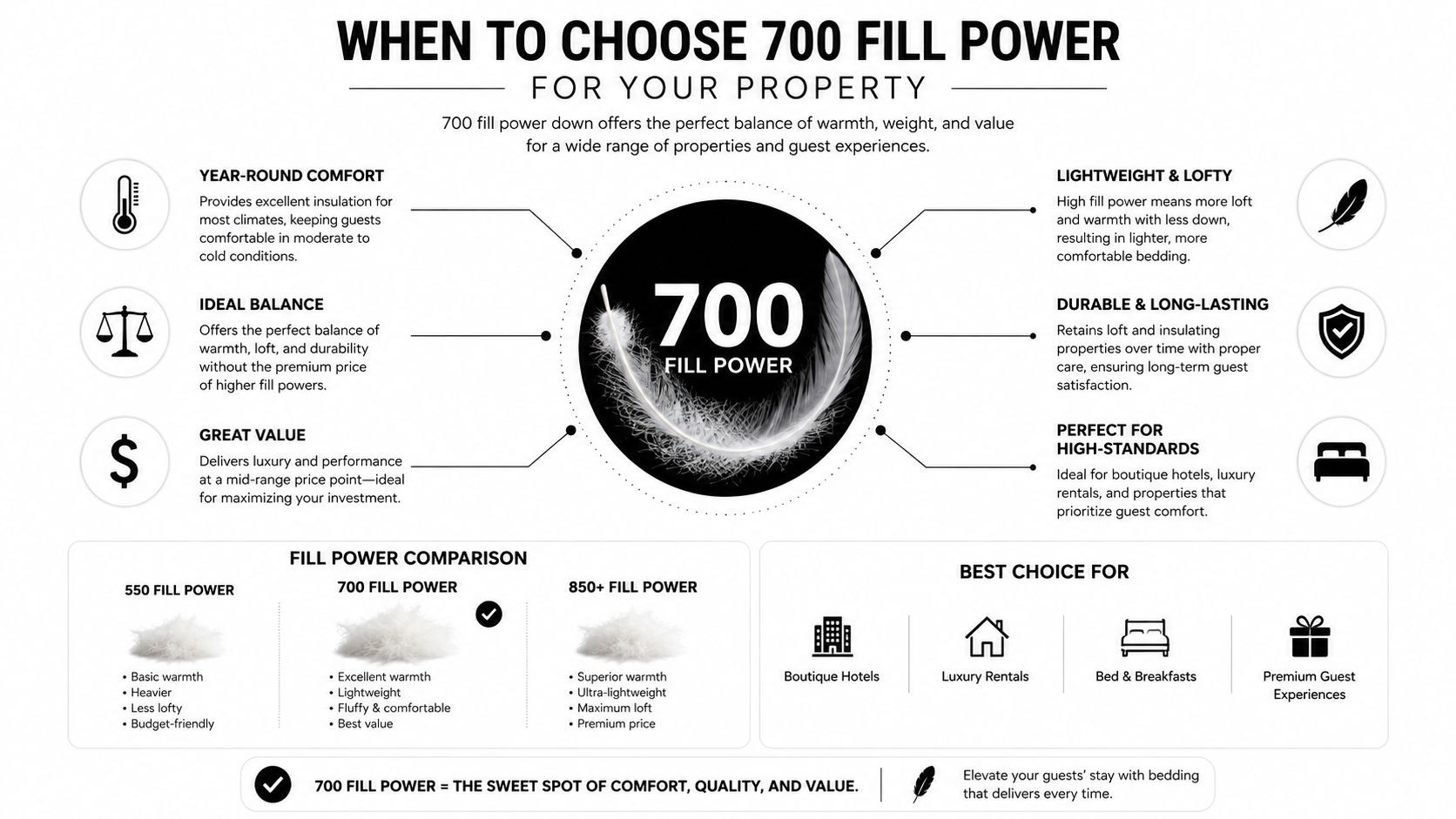
That's why 700 keeps showing up in real hotel programs. It sits in the good to premium band, with fill-power references classifying 700 to 750 as very good and 700+ as a premium threshold for export bedding, while other bedding guidance treats 700 as a middle-of-the-road option rather than an extreme spec. For procurement, that's useful. You want a product that looks and feels upscale, packs well, and doesn't become a maintenance headache the moment it enters a housekeeping cycle.
Treating fill power as the complete specification is a mistake. It isn't. A 700 fill power goose down comforter can be excellent, but only if the fill mass, down content, shell, and construction are right. Ignore those, and you can buy a lofty-looking insert that disappoints on the bed.
Higher fill power does not automatically make a better hotel comforter. It means the down clusters loft more efficiently, so you get more air trapped per ounce, not a magic promise of better sleep in every room. That distinction matters in hospitality, because a guest's perception is shaped by the whole bed package, not a single line on the spec sheet.
A 700 fill power goose down comforter hits the balance most hotel buyers need. It feels upscale, it is light enough to avoid that overstuffed, bulky look, and it stays credible when a guest lifts it or slips under it. Fill-power guidance places 700 to 750 in the very good zone and treats 700+ as premium bedding for export channels, which is exactly why it works so well in mid-scale and upscale rooms.
Practical rule: if a comforter looks expensive but feels heavy, the fill-power number is not solving the core problem. You need better fill distribution, not just a higher loft claim.
Hotel teams keep returning to 700 because it supports a polished bed presentation without forcing a jump to ultra-premium territory. One bedding guide calls 650 fill power “good fluffiness” and 700 a middle-of-the-road option, which is a fair description for procurement, not a criticism. In plain terms, 700 is where the market starts to look and feel upgraded without becoming precious.
That is also why the number shows up in all-season bedding conversations. A 700-fill insert can deliver a light, fluffy feel while still being substantial enough for a guest room that needs one dependable comforter across broad seasonal swings. For hotel groups, that makes the spec easier to standardize across properties with different room sizes and climate zones.
I would spec 700 fill power for most rooms before I would spec 800+ on autopilot. Reserve the higher number for special cases where the room climate, brand promise, or suite pricing justifies it. Otherwise, you are paying for a loft status symbol when the guest mainly wants consistent warmth, clean drape, and a bed that looks finished.
Procurement teams should read 700 as a controlled balance point. It is not budget bedding, and it is not the ceiling of quality. It is the zone where guest comfort, packability, and luxury perception can coexist without making housekeeping fight an oversized insert.
That is why 700 belongs on spec sheets for full-service and upscale select-service properties. It is a deliberate choice, not a compromise. If a supplier cannot explain why 700 is appropriate for the room type, shell, and fill mass they are quoting, they are selling you a headline, not a solution.
Fill power is a loft measurement, plain and simple. It describes how many cubic inches one ounce, or 28.35 g, of down occupies after a standardized weighted-disk test, which is why 700 fill power means that one ounce of down expands to about 700 cubic inches under test conditions. That is the core of the metric, and it gives buyers a repeatable way to compare down quality across suppliers.
The bigger the down cluster, the more air it can trap. More trapped air means better insulation efficiency per ounce, which is why higher fill power is associated with lighter-feeling bedding. For procurement, fill power is a warmth-to-weight efficiency benchmark, not a direct comfort score.
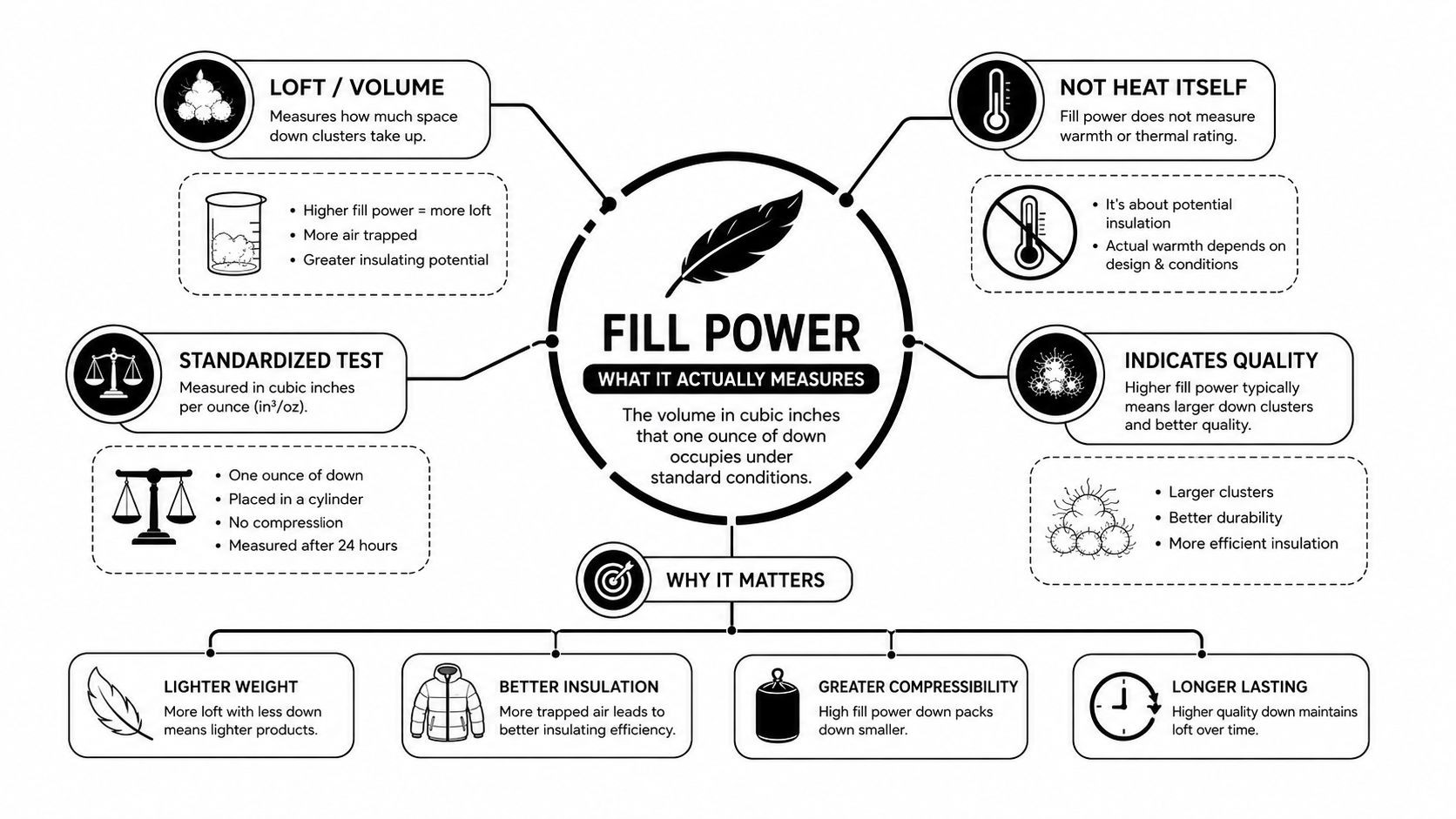
Fill power is a shortcut for loft and compressibility. A higher number usually means bigger, more resilient clusters that rebound better and hold more air, which is why the bedding industry uses it as a quality marker. It does not tell you how much down is inside the comforter, and that is where many buyers get misled.
A 700 fill power goose down comforter can feel warmer or lighter than a lower-fill product, but only if the fill mass and construction are comparable. If the shell is weak, the stitching is wrong, or the comforter is underfilled, the number will not rescue the product. Read fill power as a starting point, not the final word.
Procurement lens: fill power tells you how efficiently the down works. It does not tell you whether the final product was engineered properly.
Procurement levers sit beside the number. Fill mass controls how much insulation is in the insert, down content affects the hand and durability, shell construction affects durability and drape, and seasonality determines whether the guest needs a lighter all-season piece or a heavier winter build. For a synthetic comparison point, see a down-alternative comforter spec, which shows how the market shifts when loft is created with fill design instead of natural down clusters.
Once you read it that way, 700 stops looking like a random threshold. It becomes a practical specification point you can defend internally. That is a better position than chasing a bigger number you cannot verify in use.
The buyer's job isn't to crown the loftiest number. It's to pick the comforter that matches the room, climate, and brand promise. Here's the cleanest way to think about the range:
| Fill Power | Warmth-to-Weight | Cost Tier | Best Hotel Fit |
|---|---|---|---|
| 600 | Good, but more fill mass is usually needed for the same feel | Lower to mid | Economy rooms, tighter budgets, properties that prioritize easy replacement |
| 700 | Balanced. Light feel with strong insulation efficiency | Mid-premium | Most standard guestrooms, upscale select-service, all-season use |
| 800 | Higher loft with a noticeably lighter hand | Premium | Cold-climate resorts, suites, brand-led luxury programs |
| 900 | Extreme loft efficiency and very high luxury signaling | Ultra-premium | Showcase suites, signature products, very demanding luxury positioning |
The point of this table is simple. 700 is the balance point most hotel rooms need. 600 can work when the spec is driven by cost or turnover. 800 and 900 start to matter when the property is selling a premium experience and the bed itself is part of the revenue story.
A 700-fill product gives you enough loft to satisfy the guest, but not so much that the spec becomes fragile or over-branded. In practice, the finished room matters more than the label. If the insert looks full, holds shape, and doesn't feel heavy, the guest reads it as premium.
That's why some consumer guides group 650 to 700 as a mid-range sweet spot and 750 to 800 as premium, while treating 850+ as luxury-grade down. I agree with that basic curve for hospitality. You only step up when the room demands it.
Opinionated takeaway: paying for 900 when the room doesn't need it is spec vanity. Use the money on shell quality, fill consistency, and better laundering discipline instead.
I'd move to 800+ only when the room's operating reality justifies it. That means colder climates, luxury suites, or a brand where the bed is expected to feel especially airy and refined. At that point, the hand-feel and visual drape become part of the product story.
But don't confuse “higher” with “more appropriate.” The more extreme the fill power, the more important it becomes to match the rest of the spec. A thin shell or sloppy construction will waste the benefit fast.
Fill power gets the headline, but down content and fill mass decide how the comforter behaves on the bed. As noted earlier, the label can look impressive while the build underneath is ordinary. Hotel buyers should care about the actual fill recipe, because that is what governs loft retention and the guest's first impression.
Fill mass is where warmth gets engineered. A commercial 700+ fill-power Bavarian goose-down comforter lists fill weights from 11 oz in Twin summer up to 48 oz in Cal King arctic, while finished weights range from 46 oz to 112 oz across warmth levels and sizes. That tells you the important part. Warmth scales primarily through fill mass, not through a magic number on the spec sheet.
The shell is what keeps the fill working the way it should. Many 700-fill products are paired with a 400-thread-count cotton shell and baffle-box construction so the down can loft fully and stay distributed evenly. That combination matters because it reduces cold spots and helps the comforter keep its shape under guest use.
A weak shell ruins a strong fill. Thin fabric lets down escape, and poor construction lets it migrate to the edges. The guest does not care that the catalog said 700 if the center of the bed feels flat by week three.
Specification rule: if the supplier cannot name the shell fabric, thread count, and construction method, the fill-power number is doing too much work.
Procurement gets sharper when you examine the details. Two comforters can both say 700 fill power and perform very differently because one has more fill, a stronger shell, and baffle walls, while the other is easier to market. That is why I want size-by-size fill weights, clear shell materials, and a construction callout in every RFQ.
Care also matters, because the best-built comforter still loses performance if housekeeping treats it badly. Use a clear laundering and maintenance process, like the one outlined in this hotel bedding care guide, so the fill keeps its loft and the shell does not wear out early.
A good 700 spec is a system. Fill power tells you the efficiency of the down. The rest of the line tells you whether the product will survive real hotel use.
Goose down usually has the edge on warmth-to-weight because goose clusters are typically larger and more resilient than duck clusters, but that doesn't make goose the answer everywhere. A high-quality duck down quilt with 700+ fill power can outperform a low-quality goose down quilt with a lower rating, which is why bird type alone is a lazy way to buy bedding. Compare apples to apples, or don't compare at all.
For hotel groups, duck down can make sense when you want genuine down feel at a more accessible position. Goose down is better when you're chasing lighter weight, stronger loft signaling, and a more refined guest impression. The choice is less about prestige and more about how hard you want the bedding to work for the money.
Synthetic microfiber and hollowfiber fills exist for a reason. They're used when the property cares more about allergy policy, easier care, or price discipline than natural loft. That's a legitimate operating choice, especially in high-turnover or budget-sensitive environments.
If you want to compare a down alternative directly, this down-alternative comforter reference is the sort of product category hotel buyers use when they need a non-down option. I'd use synthetic fills for strict allergy programs, frequent wash requirements, or rooms where the guest won't pay for the natural-down story.
Duck down, goose down, and synthetic fills each solve a different hotel problem. Goose down at 700 works best when the property wants a refined feel and enough insulating efficiency to keep the bed light. Synthetic wins when washing, policy, or budget takes priority. Duck down sits in the middle when you want natural fill with less cost pressure than goose.
The wrong move is choosing by reputation alone. The right move is choosing by room type, climate, and care model.
A 700 fill power goose down comforter makes the most sense in full-service and upscale select-service hotels that want a polished guest room without pushing into showpiece pricing. It also fits temperate climates where the bed needs to work year-round instead of serving as a pure winter product. That's where the balance really pays off.
I'd also use 700 for properties that want a soft luxury signal without the operational weight of 800+. The comforter feels refined, compresses well for storage and handling, and still gives the room the soft, “finished” look guests expect from higher-tier bedding. That makes it a strong default for multi-property programs.
Good procurement rule: choose 700 when you need broad room coverage, not niche prestige.
If you're running a cold-climate resort, a top-suite program, or a property where the bed itself is part of the upsell, move up to 800+. The extra loft efficiency starts to matter more there, especially when the guest is paying for a visibly premium sleep experience. In those settings, 700 can still work, but it may not stretch far enough in perception.
If you're managing high-turnover economy rooms or a strict allergy policy, step down to synthetic. You'll get easier care and fewer sourcing complications. That's not a compromise, it's the correct tool for the job.
East West Hotel Textile offers hotel bedding lines, including duvets and pillows, that fit this kind of category-based procurement work, so it's one source buyers can review alongside other suppliers when they're matching fill system to room class (East West Hotel Textile bedding and pillows).
For most hotel rooms, 700 is the sweet spot. It gives you a better guest story than low-fill product, avoids the inflated cost logic of chasing 800+ everywhere, and leaves room in the budget for the details that matter just as much. If the property has a special climate or brand requirement, adjust up or down. Otherwise, spec 700 and tighten the rest of the build.
Start by requiring a lab-tested fill power claim, not a brochure number. Then ask for the minimum down-cluster percentage, the fill mass by size, and the exact shell construction. If the vendor can't answer those four items cleanly, the spec isn't tight enough.
Use this checklist in your next RFQ:
Verify fill power testing: ask how the 700 claim was measured and require a documented standard, not a marketing line.
Set down content: specify the minimum goose down percentage so you're not comparing premium language to a weak blend.
Lock fill mass by size: demand size-specific ounce weights for summer, medium, or winter versions if you're buying multiple warmth levels.
Name the construction: require baffle-box, double-needle, or sewn-through by line item so there's no ambiguity.
Specify the shell: list the fabric and thread count, especially if you want a cotton shell that holds loft and feels polished.
Check law-label compliance: confirm the product is labeled correctly for the destination market before you approve shipment.
Each item above affects a guest outcome. Fill power influences loft and hand-feel. Down content influences how much of the product is working as premium fill. Fill mass determines real warmth. Construction and shell decide whether the product keeps performing after repeated use.
If you want care guidance to sit alongside the spec, review a practical laundering reference such as this hotel bedding care guide before you finalize the maintenance plan. Bedding only stays impressive if housekeeping can keep it that way.
Final procurement move: buy the whole system, not the fill-power headline.
A strong 700 fill power goose down comforter specification should be easy to defend internally because it balances guest comfort, operational simplicity, and room presentation. If you're sourcing bedding for hotels, resorts, or multi-property programs, East West Hotel Textile can supply hotel bedding and related textile categories that fit a structured procurement workflow. Visit East West Hotel Textile to review the range and match your comforter spec to the rest of the guestroom program.
Read More

The Whole List of All Three MICHELIN Key Hotels in 2026
Release date: 2026-10-07
EastWest Inside: Hotel Linen Manufacturing Process
Release date: 2026-09-21
Top Rated Pet-Friendly Hotels Around the World
Release date: 2026-09-08