


Top Rated Pet-Friendly Hotels Around the World
Release date: 2026-09-08Release Date: 2026-06-15 16:15:48
The 2026 FIFA World Cup is reshaping the hospitality industry across North America, though not in the way many businesses originally anticipated. Instead of a continuous, overwhelming wave of tourism, the tournament is creating highly localized micro-peaks driven primarily by domestic travelers and specific match days. High prices, visa complications, and changing consumer behaviors have forced hotels and restaurants to pivot from standard "mega-event" playbooks to real-time, flexible strategies.
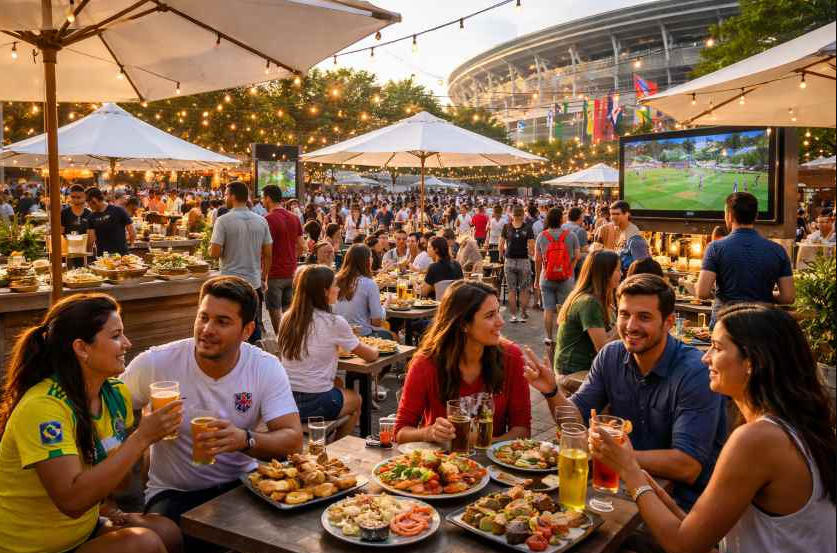
⇨ The Slower-Than-Expected Booking Pace: Early predictions forecasted massive room shortages, leading hotels to inflate room rates by 300% or more (pushing standard rooms past $1,000 a night). However, reports from the American Hotel & Lodging Association (AHLA) reveal that nearly 80% of hotels in U.S. host cities are tracking below initial projections.
⇨ The "Non-Event" for Regular Travel: In major markets like New York, San Francisco, and Boston, bookings are comparable to or even lower than a typical summer. This is largely due to visitor displacement—regular leisure and business travelers are actively avoiding host cities to escape rumored price hikes and congestion
⇨ Massive FIFA Room Block Drops: In previous years, FIFA reserved massive institutional room blocks for sponsors, staff, and VIPs. Over the past months, FIFA has released large portions of these unutilized blocks back into the open market, creating sudden inventory surges and forcing hotels to lower rates by 40% from their initial highs.
⇨ International vs. Domestic Shifts: While international bookings to host cities via platforms like Trip.com did see a 70% uptick for the group stages, stricter U.S. visa processing and high transatlantic travel costs have curbed long-haul international attendance. Instead, local and domestic "drive-in" markets are filling the gap, resulting in shorter stays and lower overall revenue per guest.
⇨ Micro-Peaks and Fan Zones: Demand is heavily concentrated directly around stadium districts, downtown corridors, and fan zones on match days. Restaurants and bars are seeing immediate surges in foot traffic from fans spending time outside the stadiums before and after matches.
⇨ The Rise of Public Viewings: Consumer research from NielsenIQ (NIQ) highlights that millions of fans who didn't buy stadium tickets are choosing to watch games in pubs and bars. Establishments showing the matches are seeing revenue spikes between 25% and 44% compared to standard summer days.
⇨ Extended Service Hours: Because matches span multiple time zones across Canada, Mexico, and the United States, hospitality businesses are restructuring to cater to a 24-hour matchday experience—ranging from morning coffee watch-parties to late-night takeaway concepts.
⇨ Canada and Mexico Outperforming the U.S.: In terms of relative growth, Canada and Mexico are seeing stronger early demand metrics than the U.S.. Average hotel prices in Mexico have surged 114% year-over-year, and Canada has seen a 92% lift, driven by smaller baseline hotel inventories and deeper regional football culture.
⇨ Supply Chain and Regulatory Adaptations: Local governments have adjusted laws to help the industry cope with the influx. For example, British Columbia launched a targeted three-year trial allowing bars and restaurants to buy liquor from private retailers to bypass state-run wholesale bottlenecks during peak match days.
| Hospitality Segment | Initial Expectation | 2026 Reality |
|---|---|---|
| Hotels (U.S. Gateways) | Multi-month 100% occupancy at 300%+ premium rates | Short, localized match-day spikes; downward price corrections |
| Hotels (Canada/Mexico) | Modest regional interest | Exceptional performance due to lower hotel supply and high local demand |
| Restaurants & Bars | Broad, generalized economic lift across cities | High concentration of foot traffic specifically in designated entertainment districts |
| Short-Term Rentals | Stagnant due to hotel dominance | Surging demand (up over 200% in cities like Miami) as fans seek cheaper alternatives |
Read More

Top Rated Pet-Friendly Hotels Around the World
Release date: 2026-09-08
Which Hotels Have the Best Hotel Views In The World?
Release date: 2026-09-03
Which 5 Star Hotel Brand Has the Best Hotel Bedding?
Release date: 2026-08-31