


The Whole List of All Three MICHELIN Key Hotels in 2026
Release date: 2026-10-07Release Date: 2026-08-10 19:04:38
For hotel purchasing departments, property management companies, hotel linen distributors, and home goods distributors, textile procurement is a balancing act between guest satisfaction and asset management. Every linen item chosen represents a direct investment in the property’s brand equity and bottom line. Among these assets, few items establish a more intimate, sensory connection with a guest than a premium hotel bathrobe.
Whether hanging elegantly in an executive suite wardrobe or presented poolside at a five-star resort, a bathrobe is a tangible expression of a hotel's commitment to luxury. However, from a commercial perspective, a hotel collection bathrobe cannot simply look appealing—it must operate as a highly durable industrial textile capable of enduring hundreds of harsh commercial laundry cycles.
This comprehensive procurement guide provides commercial buyers and distributors with the exact technical frameworks, material formulations, and operational strategies required to optimize bathrobe inventory, control costs, and deliver an uncompromised guest experience.
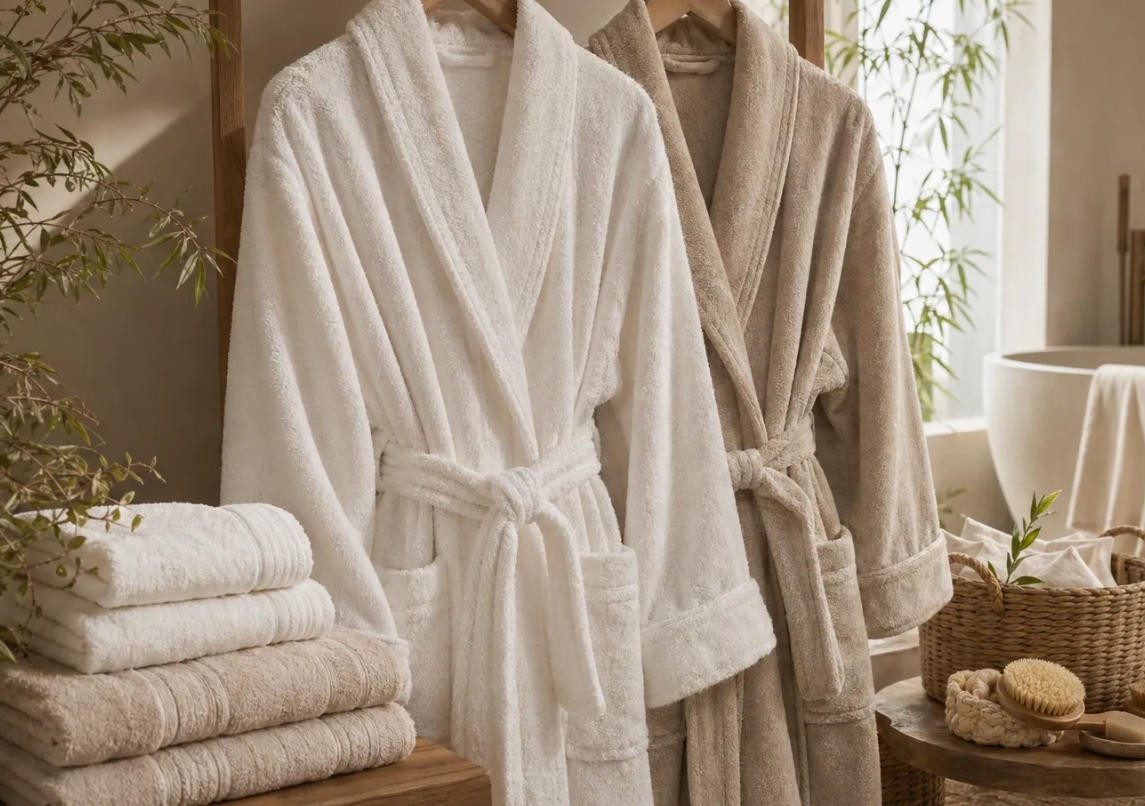
In the modern hospitality landscape, guest satisfaction is heavily data-driven, influencing online review scores, brand loyalty, and property revenue. While high-quality bedding and top-tier mattresses are standard expectations, secondary amenities like spa-grade apparel differentiate a good stay from an unforgettable one.
The Sensory Touchpoint
The moment a guest steps out of the shower or relaxes on a terrace, the tactile transition from a bath towel to a robe is a critical moment. A cheap, coarse, or poorly fitted garment instantly degrades the perceived quality of the entire room. Conversely, an expertly engineered terry cloth bathrobe provides an immediate sense of security, warmth, and relaxation. It signals to the guest that the property prioritizes their comfort above all else.
Brand Differentiation and Marketing
A premium bathrobe also serves as a subtle marketing tool. High-end properties utilize customized embroidery, unique piping, or distinct collar styles to reinforce their identity. When guests post photos of their travels on social media platforms, a beautifully branded robe acts as organic, visually appealing marketing for the hotel. Furthermore, a highly comfortable robe creates an excellent opportunity for on-property retail, allowing guests to purchase the item as a luxury souvenir and establishing an additional revenue stream for the property.
When procurement teams analyze a manufacturing specification sheet, understanding the exact yarn construction and fabric composition is crucial. Selecting the wrong material can lead to premature fabric degradation, excessive shrinkage, or high laundering costs.
100% Combed Ring-Spun Cotton
Cotton is the gold standard for traditional comfort due to its natural breathability and exceptional absorbency. However, commercial buyers must look beyond generic "100% cotton" labels and specify the yarn processing method:
· Open-End Cotton: The lowest grade. Fibers are twisted loosely, creating a rougher texture that degrades quickly under harsh laundry chemicals.
· Ring-Spun Cotton: Long cotton fibers are continuously twisted together to form a tight, smooth, and incredibly strong yarn. This process increases tensile strength and provides a noticeably softer feel.
· Combed Cotton: The ultimate luxury standard. The ring-spun yarn undergoes an extra combing step to remove short, brittle fibers and impurities. This results in an ultra-smooth fabric that resists pilling and retains its plush softness over dozens of wash cycles.
Cotton-Polyester Blends (The 80/20 Rule)
For high-occupancy properties, corporate hotel chains, and budget-conscious property management companies, an 80% cotton and 20% polyester blend is highly effective.
· The Structural Core: In these blended fabrics, the structural base warp of the robe is woven with polyester yarns for immense tensile strength, while the exterior loops that touch the guest's skin remain 100% cotton.
· The Operational Advantage: Blended fabrics absorb significantly less water during the wash cycle, reducing extraction weight. This translates directly to a 12% to 18% reduction in industrial drying time, saving properties thousands of dollars annually in energy costs. Furthermore, polyester drastically reduces fabric shrinkage and extends the garment's operational life.
Microfiber and Plush Fleece
Modern luxury properties are increasingly adopting high-performance synthetics, particularly for spa environments and colder climates.
· Microfiber Exterior with Terry Lining: These dual-layer garments feature a sleek, wind-resistant, stain-proof microfiber exterior paired with a traditional absorbent cotton-terry lining. They offer a tailored look that does not look bulky on the hanger.
· Coral Fleece: An ultra-soft, velvety synthetic fabric that provides immediate warmth and insulation. While it is not designed to absorb water from a wet guest, it is highly valued in luxury resort lounges and wellness retreats for its soft feel.
In textile manufacturing, fabric thickness and density are quantified by Grams per Square Meter (GSM). Understanding GSM allows hotel linen distributors and purchasing managers to match the right robe to the property's climate, room tier, and operational setup.
200 – 300 GSM: Lightweight Agility
· Best Uses: Tropical resorts, pool decks, fitness centers, and medical spas.
· Common Weaves: Lightweight waffle weave or flat-woven low-pile terry.
· Operational Outlook: These robes are exceptionally cost-effective to wash and dry. They take up minimal space in commercial washing wheels and linen carts, allowing for maximum efficiency per load.
350 – 450 GSM: The Premium Hospitality Benchmark
· Best Uses: Four- and five-star business hotels, premium king rooms, and standard boutique properties.
· Common Weaves: Classic medium-density terry cloth bathrobe profiles.
· Operational Outlook: This range offers the ideal balance of luxury and practicality. The fabric feels substantial, heavy, and premium to the guest, yet it avoids the extreme drying times that plague heavier textiles.
A consumer-grade bathrobe purchased at a retail store is designed for gentle use by a single individual. A commercial hotel bathrobe must be engineered like industrial equipment. When evaluating manufacturer samples or structuring a Request for Proposal (RFP), purchasing managers must insist on specific structural reinforcements.
Feature Component | Retail / Consumer Grade | Commercial Hotel Grade Specification | Operational Purpose |
Seam Construction | Single-needle overlock | Double-needle flat-felled stitching | Prevents unraveling under high-pressure industrial spinning. |
Pocket Attachments | Standard perimeter stitch | Double-stitched perimeter with top bar-tacks | Eliminates tearing caused by guests inserting heavy items. |
Hanger Loop | Thin fabric scrap ribbon | Heavy-duty, tightly woven twill tape | Ensures the robe stays securely hung without stretching out. |
Belt System | Single fixed loops | Dual-height double belt loops | Adjusts vertical fit for varying heights. |
Collar Style Configurations
The collar dictates both the style of the robe and its thermal properties:
· The Shawl Collar: A timeless design that rolls over the neck, mimicking the plush appearance of a premium down duvet cover. It provides exceptional neck warmth and looks highly premium when folded on a bed or hung in a wardrobe.
· The Kimono Collar: A flat, T-shirt style neckline with Japanese architectural roots. It is sleek, contemporary, and sits flush against the skin. Because it lacks the rolled fabric bulk of a shawl collar, it is lighter, folds flatter, and processes more efficiently in industrial flatwork irons or folders.
· The Hooded Robe: Frequently deployed at beach resorts, wellness properties, or family-oriented luxury retreats. The integrated hood provides maximum warmth for wet hair and protects guests from coastal breezes.
A common mistake in commercial procurement is ordering a single size for an entire property. Human bodies vary wildly, and a robe that is either dangerously short or overly long and dragging can alienate guests or create safety hazards.
The Standard Universal Breakdown
For standard room configurations, a calculated size distribution keeps guests comfortable while preventing dead stock in your linen closets. Home goods distributors should recommend this classic percentage breakdown to their hospitality clients:
The Geometry of a Perfect Fit
When issuing specifications to a manufacturer, never rely on labels like "Large" or "XL" alone. Always demand exact physical measurements in centimeters:
· Length: Measured from the center back neck seam to the bottom hem. A standard commercial Large should measure roughly 120 to 125 cm to ensure it hits mid-calf on an average adult.
· Sweep: The total width of the robe's fabric unfolded at the hemline. A generous sweep (140 to 150 cm for a Large) is essential. A wide sweep ensures a complete wrap around the waist, preventing accidental gaping when the guest sits down.
· Sleeve Style: Adjustable cuffs are highly preferred. Sleeves should feature a rolled-cuff design, allowing shorter guests to fold back the fabric neatly without compromising the robe's aesthetic.
For property management companies and hotel operations directors, the initial purchase price of a textile is only a small fraction of its actual lifecycle cost. The true financial metric is the Total Cost of Ownership (TCO), which is deeply affected by laundering durability.
Navigating Chemical Degradation
Commercial hotel laundries rely on aggressive chemical formulations to sanitize linens quickly. This process typically involves chlorine bleaches, heavy alkalines, and optical brighteners.
· The Risk: These chemicals break down natural cotton fibers, stripping the material of its strength and turning soft loops into stiff, scratchy fabric.
· The Solution: Procurement managers must ensure their white cotton robes are vat-dyed white or treated with chlorine-resistant finishes. For colored or gray robes popular in modern boutique hotels, indanthrene dyes are mandatory. These specialized dyes resist color fading and bleaching, keeping the robes vibrant for up to three times longer than standard dyed fabrics.
Controlling the Shrinkage Factor
Because cotton is a natural fiber, it shrinks when exposed to high-heat commercial washing and drying. Standard hotel collection bathrobes can shrink by up to 8% to 12% during their first few wash cycles.
· Procurement Action Plan: Buyers should explicitly request preshrunk or sanforized fabrics from their suppliers. If preshrunk options are unavailable, the purchasing agent must adjust their size matrix upward, buying robes that are slightly oversized out of the box so they shrink down to the target dimensions.
To streamline the procurement process, hotel linen distributors and corporate buyers need an organized framework for vetting international textile mills. When drafting your next Request for Proposal (RFP), ensure these quality control checkmarks are included:
1. Oeko-Tex Standard 100 Certification: This certification guarantees that the bathrobes are entirely free from harmful chemicals, heavy metals, and formaldehydes. This is an essential safety compliance document for major international hotel brands.
2. Tensile Strength & Pile Retention Metrics: Request verified laboratory test reports demonstrating how well the fabric resists tearing and loop pulling under high tension.
3. Hems and Stitch Density: Specify a minimum of 4 to 5 stitches per centimeter along all major seams. Low stitch density is a clear indicator of cheap manufacturing and almost always leads to seam failures within the first thirty industrial washes.
4. Bulk Packaging Logistics: For large property openings or multi-property management groups, request ocean freight packaging in compressed, moisture-proof bales. This minimizes shipping volume and protects the fabric from mold or mildew during long maritime transit routes.
Conclusion: Driving Profitability Through Textile Excellence
In the highly competitive hospitality landscape, every purchasing decision acts as a direct reflection of a property's brand standards. Selecting a high-specification hotel bathrobe is not merely an administrative inventory task; it is an investment in operational durability, guest satisfaction, and long-term profitability.
By moving past low-cost retail options and focusing on combed ring-spun cotton yarns, proper GSM optimization, and robust commercial stitching, procurement specialists, property managers, and distributors protect their capital investments. A premium robe reduces replacement frequency, lowers utility costs in the laundry room, and elevates the guest experience—proving that in luxury hospitality, attention to technical detail is the ultimate driver of ROI.
Read More

The Whole List of All Three MICHELIN Key Hotels in 2026
Release date: 2026-10-07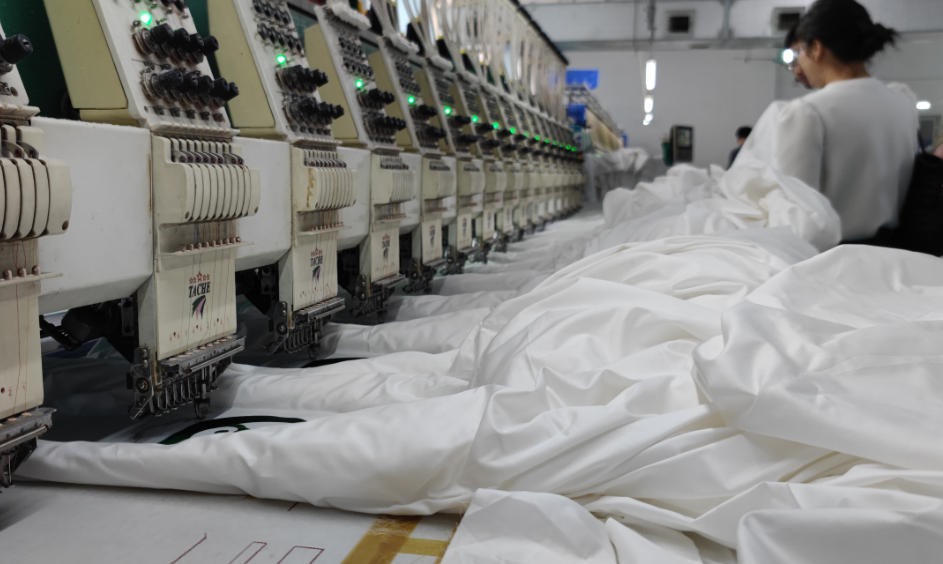
EastWest Inside: Hotel Linen Manufacturing Process
Release date: 2026-09-21
Top Rated Pet-Friendly Hotels Around the World
Release date: 2026-09-08