


The Whole List of All Three MICHELIN Key Hotels in 2026
Release date: 2026-10-07Release Date: 2026-11-03 19:02:26
Critical digital services need power protection that can respond when the utility supply becomes unstable or unavailable. A lithium UPS project combines power conversion and battery-storage considerations, so capacity, runtime, safety controls, and maintenance planning all need to be assessed together. A successful installation depends on how well technical choices match the site and its users. Design teams should distinguish what the equipment can do in principle from what the complete site is configured and approved to do. The central design task is to connect the selected equipment with a clear site requirement.
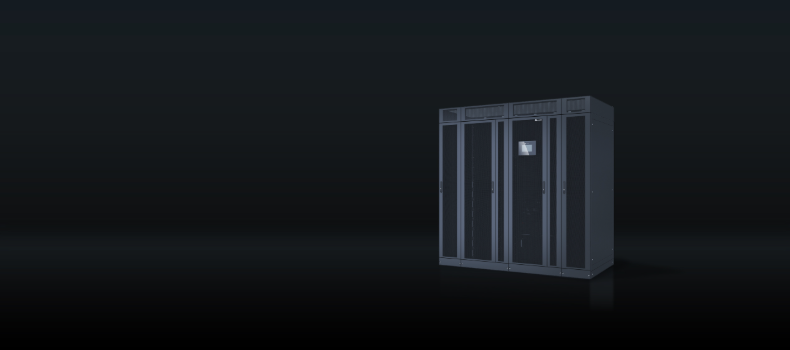
An example of the infrastructure discussed in this article.
UPS efficiency varies with load level and operating mode. A unit may perform differently at light load than near its rated capacity, so comparisons should use the site's expected load profile. High-efficiency modes can reduce losses, but their transfer behavior and protective characteristics must be evaluated against the critical load and the operator's risk tolerance.
A redundant UPS configuration can improve availability, but the result depends on distribution paths, bypass design, switchgear, battery strings, and common upstream sources. Engineers should map failure modes and determine whether a single fault can affect multiple protected loads. Maintenance scenarios are especially useful for identifying hidden shared dependencies. For a closer look at the solution scope, review lithium UPS and consider how its documented functions fit the site layout, electrical interfaces, and operating plan.
A useful monitoring strategy covers battery voltage, current, temperature, state of charge, UPS loading, alarms, fan condition, and key component health indicators. Trends can help identify a deteriorating battery string or a cooling issue before it becomes an outage. Alarm thresholds should be linked to response procedures and clearly assigned responsibilities.
Battery enclosures, electrical isolation, overcurrent protection, temperature monitoring, ventilation or thermal management, and emergency procedures must be designed for the selected chemistry and local regulations. Installation teams should receive the appropriate training, and end-of-life handling should be planned before deployment. Performance should always be assessed against the actual installation conditions and the complete system boundary.
Growth assumptions should be translated into specific triggers, such as additional racks, more PV capacity, new vehicle chargers, or a changed household load. The team can then identify which cables, switchgear, floor space, communications, and controls need to be reserved. This is more useful than simply labeling a design as future-ready. A project specification for lithium UPS should identify the applicable configuration, installation limits, commissioning checks, and service responsibilities.
In online double-conversion mode, the UPS continuously converts incoming AC power to DC and then back to AC for the protected load. This provides controlled output under a range of input disturbances, although conversion losses and operating conditions still matter. The selected mode should reflect the sensitivity of the load and the power-quality requirements of the site.
Read More

The Whole List of All Three MICHELIN Key Hotels in 2026
Release date: 2026-10-07
Which 5 Star Hotel Brand Has the Best Hotel Bedding?
Release date: 2026-08-31
Lithium UPS: Selection and Maintenance Considerations
Release date: 2026-11-03